Types of Wrapping Paper: How to Choose the Right One
Compare glossy, matte, kraft, tissue and foil wrapping paper, see how each one folds and tapes, and learn which to pick for the gift you are wrapping.
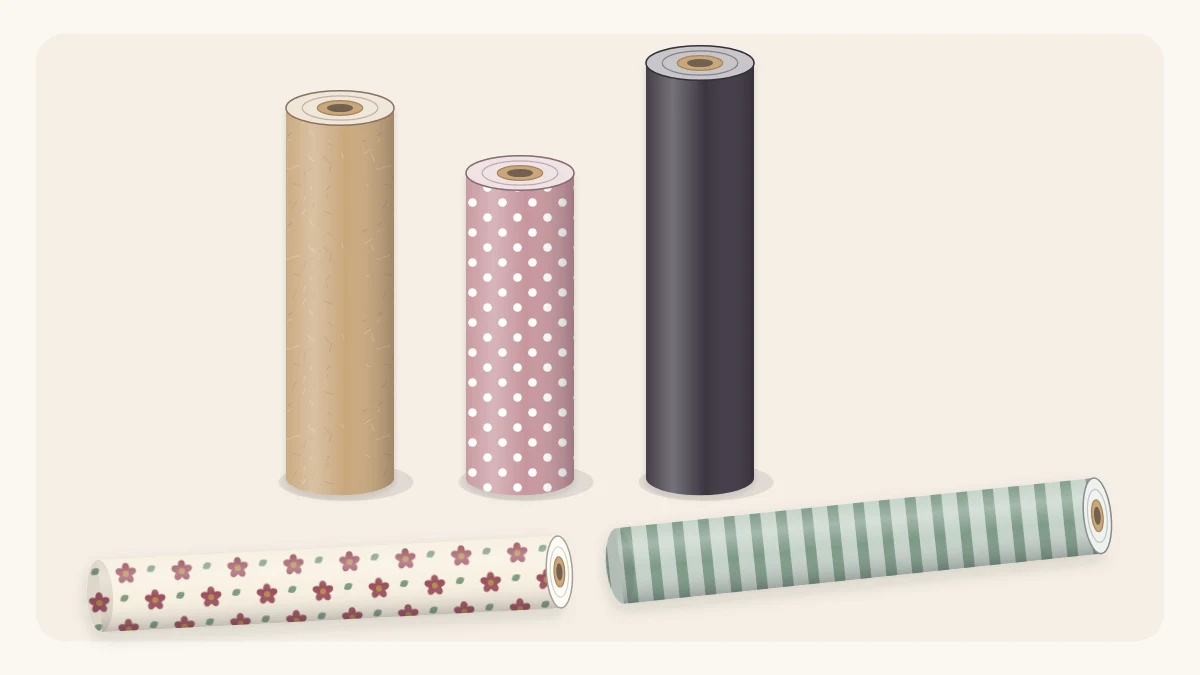
The different types of wrapping paper do not just look different. They fold, crease, tear and take tape differently, and a paper that fights you can make a careful wrap look clumsy.
Knowing how each kind behaves lets you pick the right one for the gift in front of you, and explains why some rolls seem so much easier to work with than others.
What makes one paper easier than another
Three qualities decide how a wrapping paper handles:
- Thickness. Thin paper tears at box corners. Heavy paper resists folding and makes bulky ends. Medium is the comfortable middle.
- Surface. A matte surface grips tape and hides small creases. A glossy or coated surface shows every wrinkle and can be slippery.
- Memory. Some papers hold a crease sharply; others spring back or stay marked forever by a fold made in the wrong place.
Weight is sometimes printed on the packaging in gsm, but you can judge it by hand. Fold a corner over: if it tears or turns see-through, the paper is thin; if it stays put with a clean line, it is medium; if it pushes back, it is heavy.
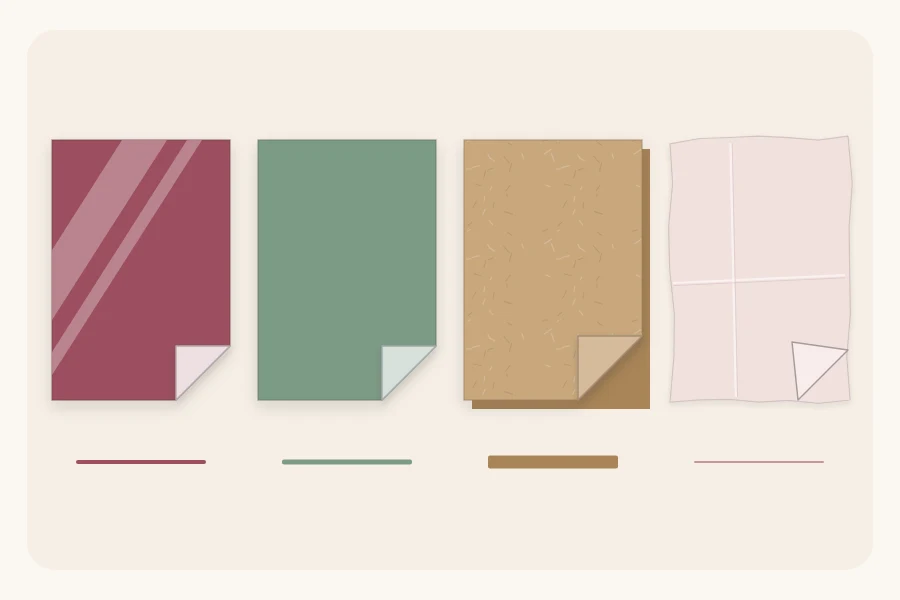
The main types of wrapping paper
Thin glossy paper
This is the bright, shiny paper sold in many multi-roll packs. It comes in endless patterns, but it tears at corners and shows creases, so any fold you rethink leaves a mark. Handle it gently, crease only where you mean to, and avoid pulling it hard across a sharp box corner.
Matte medium-weight paper
Matte medium-weight paper is the easiest to fold. It creases cleanly, forgives a second attempt, and tape sticks to it without lifting. If you are new to wrapping or want crisp ends, start here. The folds in how to fold clean corners are much simpler in this kind of paper.
Kraft paper
Kraft is the plain brown (or sometimes white or black) paper sold in rolls. It is strong, forgiving, and takes stamps and pens well, which makes it a good base for decoration. Wrapping weights are commonly around 60 to 80 gsm. It is stiffer than printed paper, so crease it firmly. For ways to dress it up, see these kraft paper gift wrapping ideas.
Tissue paper
Tissue is for lining boxes and wrapping soft items, not for covering a box on its own. Use it two or three sheets thick, and fold it loosely because it tears if pulled tight. The technique is covered in how to wrap a gift in tissue paper.
Foil and metallic paper
Foil and metallic papers look striking but are the least forgiving. They crease permanently, so a misplaced fold stays visible, and their smooth surface is slippery to tape. Measure carefully, fold once, and press the tape down well.
Wrapping paper types compared
| Type | Ease of folding | Watch for | Best use |
|---|---|---|---|
| Thin glossy | Moderate | Tears at corners | Small, light boxes |
| Matte medium | Easy | Few problems | Almost any box |
| Kraft | Easy | Stiff, needs firm creases | Books, tape-free wraps |
| Tissue | Easy but fragile | Tears if pulled | Lining, soft items |
| Foil or metallic | Hard | Permanent creases | Simple, flat boxes |
Match the paper to the gift
The shape and weight of the gift should guide the choice as much as the pattern does.
- Heavy or sharp-cornered boxes: kraft or medium-weight matte paper, which will not split at the corners.
- Small boxes: thinner paper is fine, and it keeps the folded ends from getting bulky.
- Large boxes: medium-weight paper, and check the roll is wide enough before you start.
- Soft or round items: tissue, or a soft thin paper that gathers easily.
- Handmade bags and pleats: medium-weight or kraft paper, because thin paper will not hold the shape.
Pattern size matters too. Small all-over prints hide seams and work on any box. Large motifs and stripes look best on bigger boxes and need a little more care so the seam does not cut through the design. Solid colors show every fold, which is ideal for tidy work and for the pared-back looks in minimalist gift wrapping.
Tip
If you only keep one roll at home, make it a medium-weight matte paper in a solid color or a small print. It suits most occasions, and a change of ribbon changes the mood.
Use the grid on the back
Some rolls have grid lines printed on the wrong side. They are there to help you cut straight: follow one line with the scissors and the edge will be square to the roll without a ruler.
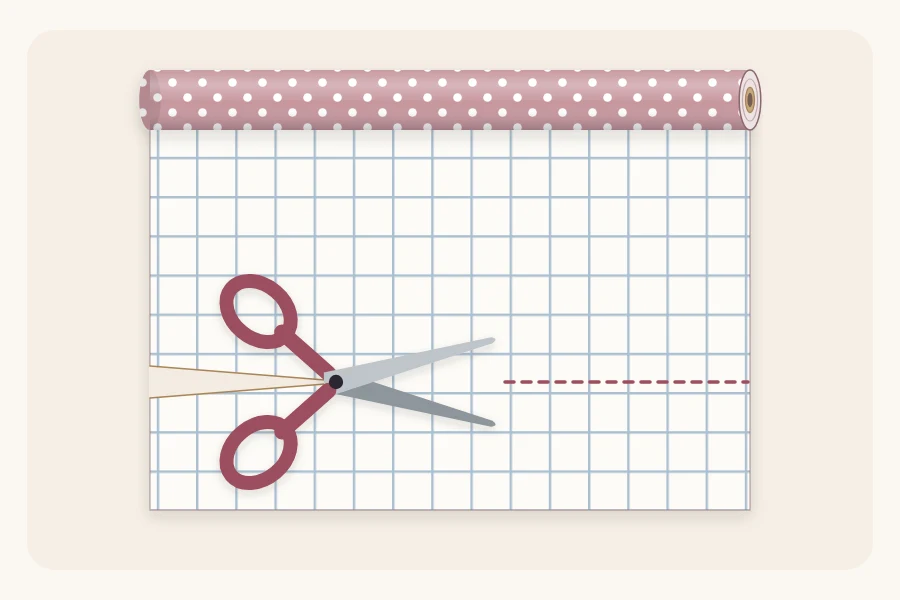
The grid also makes measuring quicker, since you can count squares instead of marking the paper. On a roll without one, a light pencil line against a ruler does the same job. How much to cut is explained in how to measure wrapping paper.
Reusing and recycling
Plain kraft paper can be smoothed out and reused, and so can tissue that has not torn. Glittery, foil or plastic-coated papers often cannot go in paper recycling in many areas, so check local guidance before putting them in the bin.
Storing rolls and sheets
Paper that is stored badly is harder to wrap with, whatever its type.
- Stand rolls upright in a tall container, or lay them flat where nothing rests on top.
- Slip a paper band or a short length of ribbon around each roll to stop it unrolling. Tape on the outside tends to tear the top layer.
- Keep tissue and flat sheets in a folder or a shallow box so the corners stay crisp.
- Store paper somewhere dry and out of direct sun, which fades colors.
Watch out
Scissors and craft knives are sharp. Children cutting paper from a roll should have adult help.
Frequently asked questions
What type of wrapping paper is easiest for beginners?
Medium-weight matte paper is the easiest. It folds cleanly, holds a crease, does not tear at box corners and lets tape stick properly. Kraft paper is a close second because it is strong and forgiving, although it is a little stiffer and needs firmer creasing.
Why does my wrapping paper keep tearing at the corners?
The paper is probably thin and glossy, which splits when it is pulled across a sharp box corner. Ease the paper around corners instead of dragging it, avoid over-tightening, or switch to a medium-weight matte or kraft paper for heavy and sharp-edged boxes.
What are the lines on the back of wrapping paper for?
They are cutting guides. Following one printed line with your scissors gives a straight edge that is square to the roll, with no ruler needed. You can also count the squares to measure how much paper to cut for the box you are wrapping.