Diagonal Gift Wrapping: How to Wrap a Box with Less Paper
Learn the diagonal wrap: set the box at an angle on the sheet, fold the four paper corners over in turn, and cover a box with a piece that looked too small.
Tutorial at a glance
Materials
- Square or near-square sheet of wrapping paper
- Scissors
- Clear tape or a sticker seal
- Bone folder or the edge of a ruler
- Ribbon (optional)
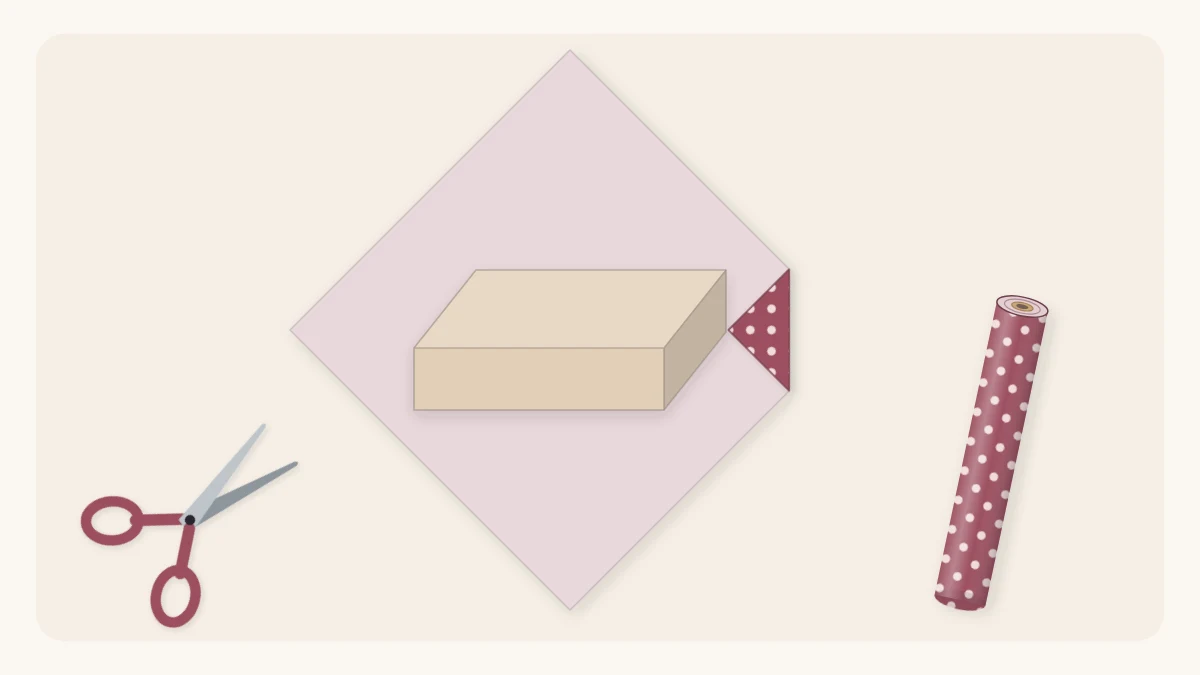
Diagonal gift wrapping is the method to reach for when the last piece on the roll looks a little too small. Instead of lining the box up with the edges of the paper, you turn it so its corners point at the sides of the sheet, then fold each corner of the paper over the box in turn.
The result is a neat parcel with angled folds across the top, closed with a single piece of tape or a sticker. It can cover a box with a sheet that would be too short for the straight method, and it is no harder to do.
Why turning the box saves paper
In a straight wrap, the paper has to travel all the way around the box and overlap, and it also has to extend past both ends. The distance across the sheet from edge to edge is all you have to work with.
When the box sits diagonally, the corners of the sheet do the covering, and the distance from corner to corner of a sheet is longer than either of its sides. That extra reach is what lets a sheet that falls short one way close comfortably the other way.
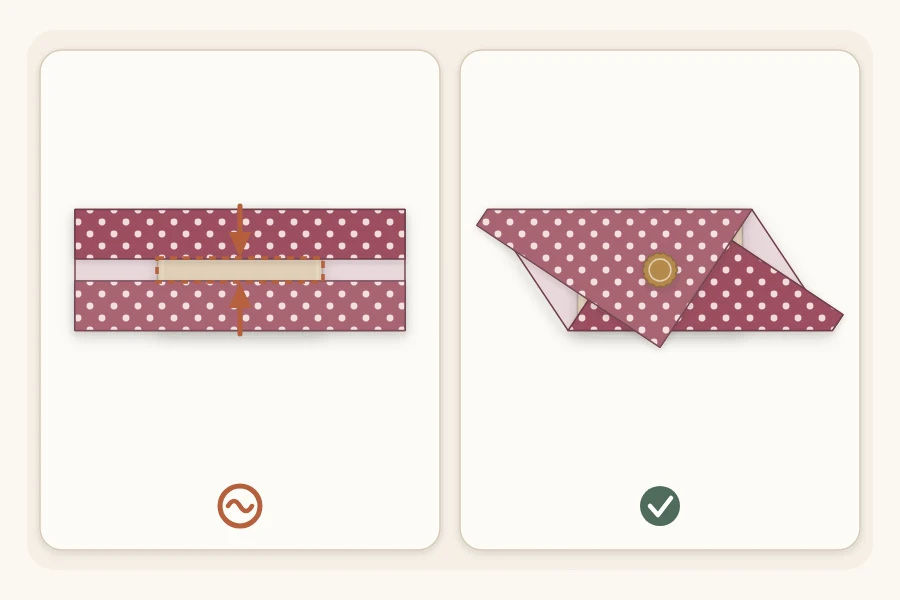
When the diagonal method works best
A square or near-square sheet works best, because all four corners then reach about the same distance. The method suits:
- leftover pieces and roll ends that are too short to go around the box the usual way
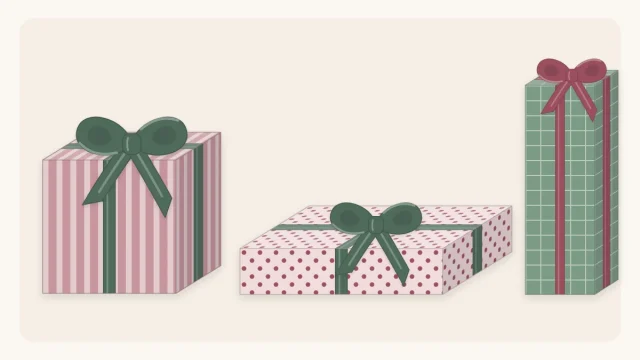
- flat and medium-height rectangular boxes, such as book-shaped or shirt-style boxes
- solid colors and small all-over prints, where the angled folds become part of the look
It is less suited to tall boxes and cubes, which need a much larger sheet and build up deep pleats at the edges. Stripes and other directional prints will run at an angle across the box, which can look lively or simply crooked depending on the design. For those boxes, the straight approach in how to wrap a box of any size is usually the better choice.
Medium-weight matte paper folds most cleanly here. Very thin glossy paper may tear where several layers are pulled around a corner; the differences are explained in the guide to types of wrapping paper.
Test the fit before you cut
There is no need for a formula. Test the fit dry before cutting: every corner of the paper must reach past the center of the top face.
- Lay the paper wrong side up and set the box on it diagonally.
- Lift each corner of the paper over the box in turn, without creasing anything.
- If all four corners pass the center with a little to spare, the sheet is big enough. If one falls short, slide the box slightly toward that corner and test again.
- If the corners overlap by a long way, trim the sheet smaller. Extra paper only makes the pleats bulkier.
If you would rather work from numbers with the straight method, see how to measure wrapping paper.
How to wrap a box diagonally
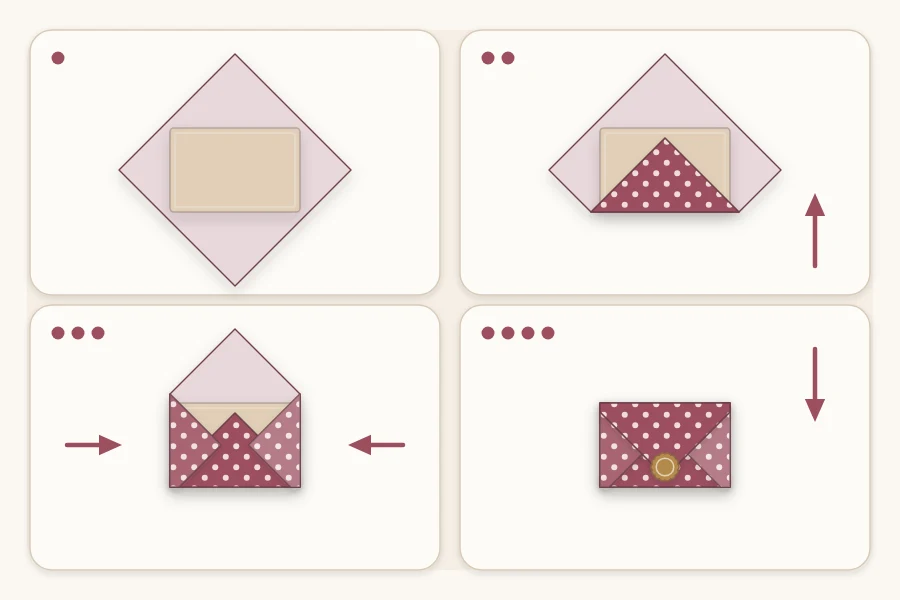
- Position the box. Place the paper wrong side up with one corner pointing toward you, like a diamond. Set the box upside down in the middle, turned so that each side of the box faces a corner of the paper.
- Fold the first corner. Bring the corner nearest you up and over the box. Pull it snug and crease the paper along the two box edges it crosses.
- Fold the left corner. The paper at the left end of the box now stands up loosely. Press the excess inward against the end of the box so it forms a flat pleat along the box edge, then bring the left corner up and over the top. Crease along the edges.
- Fold the right corner. Repeat on the right side, pleating the excess first and pulling the corner snug across the top.
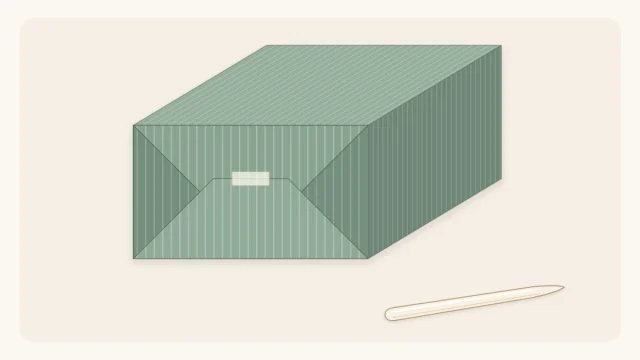
- Finish with the last corner. Fold the tip of the remaining corner under by about 1 in (2.5 cm) so it has a clean folded edge. Pleat the excess at both sides, bring the corner over the top of the others and seal it with one piece of tape or a sticker.
- Sharpen the creases. Run a thumbnail or a bone folder along every edge of the box, then turn it right side up.
Tip
If a corner keeps springing open while you work on the next one, hold it down with a book or a small piece of tape that the later folds will cover.
Keeping the pleats neat
The pleats at the box edges are what set a tidy diagonal wrap apart from a rumpled one. A few habits help:
- Press each pleat flat against the box before you bring the corner over, not after.
- Crease along the box edge every time the paper turns a corner.
- Pull snug before each fold, but do not drag thin paper across a sharp box corner.
- Keep the pleats on both sides of a corner about the same size so the folded edge runs straight.
The creasing habits are the same ones used for folding clean corners on a standard wrap.
Common problems
- A corner does not reach. The box is off-center or the sheet is too small. Unfold, shift the box toward the short corner and try again.
- The parcel looks bulky. There is too much paper. Trim the sheet and re-test the fit.
- The last corner sits crooked. The pleats on its two sides are uneven. Open it, re-pleat both sides and fold the tip under again.
- Paper tore at a box corner. Cover the tear with the next fold if you can, or switch to a slightly heavier paper.
Watch out
Scissors and craft knives are sharp. Children trimming a sheet to size should have adult help.
Finishing the parcel
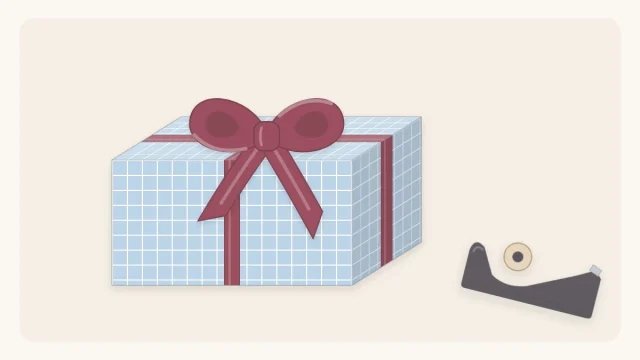
All the folds meet on one face of the box. Treat that face as the bottom for a plain, seamless top, or turn it upward and make a feature of it with a round sticker seal where the corners meet.
A ribbon crossed over the seal holds everything firmly and hides the tape. The cross tie and the bow are covered in how to tie a bow on a gift box.
Frequently asked questions
How big does the paper need to be for diagonal wrapping?
Check it against the box instead of calculating. Set the box diagonally on the sheet and lift each corner of the paper over it without creasing. If every corner reaches past the center of the top face, the sheet is big enough. Trim any large excess before folding.
Does diagonal wrapping work on any box?
It works best on flat and medium-height rectangular boxes with a square or near-square sheet. Tall boxes and cubes need a much larger piece and build up thick pleats at the edges, so the straight method is usually neater and easier for those shapes.
Why does my diagonal wrap look bulky?
Bulk almost always comes from too much paper or from pleats that were not pressed flat. Trim the sheet so the corners only just pass the center, press each pleat against the box before folding the corner over, and crease firmly along every box edge.