Gift Wrapping Supplies: What You Need to Get Started
A short, practical list of gift wrapping supplies: the five basics that wrap almost any box, the extras worth adding later, and how to store them.
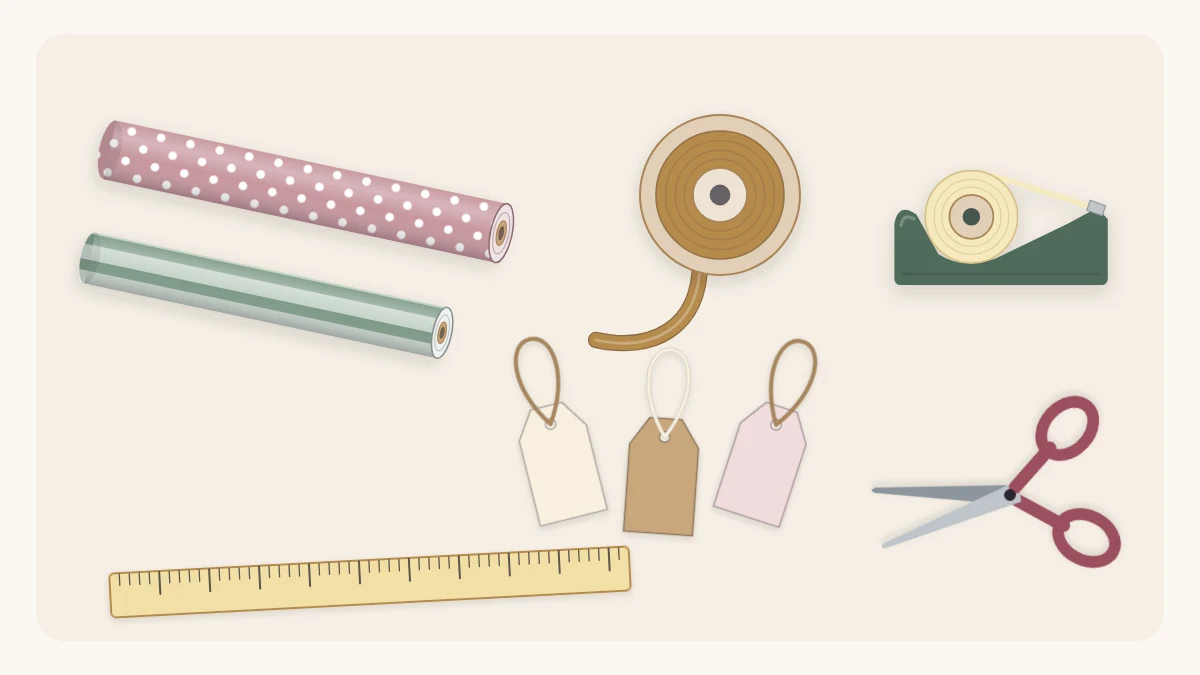
You need far fewer gift wrapping supplies than a craft aisle suggests. Five basic items will wrap almost any box neatly, and a handful of inexpensive extras make the work faster and the result cleaner.
This list is split in two: the basic kit to start with, and the extras to add once you know what you enjoy making. Everything is described by type, so you can use whatever you already have at home.
The basic kit
- One roll of paper. Choose a medium-weight matte paper in a pattern or color that suits several occasions.
- Sharp scissors. Long blades cut straighter lines than short ones.
- Clear tape. A weighted dispenser lets you tear a piece with one hand while the other holds the paper.
- A ruler. For measuring, for guiding a straight cut and for pressing creases.
- A pencil. For light marks on the back of the paper.
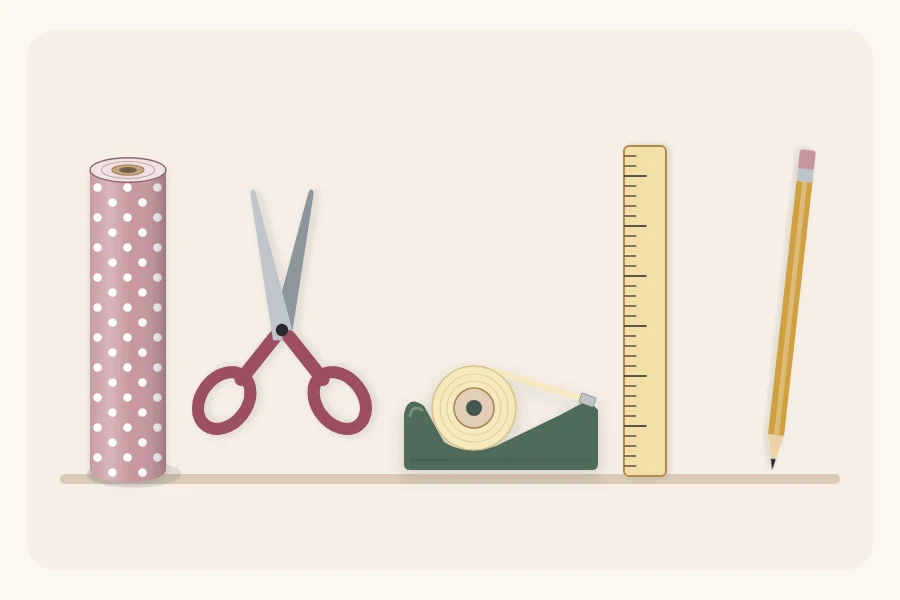
With these five things you can follow the whole of how to wrap a gift from the first cut to the last crease.
Choosing your first paper
Paper matters more than any tool. The wrong sheet tears at the corners or shows every crease, and no amount of care fixes that.
| Paper | How it handles | Best for |
|---|---|---|
| Matte, medium weight | Easiest to fold | Everyday box wrapping |
| Kraft | Strong and forgiving | Heavy or large gifts, stamping |
| Thin glossy | Tears at corners, shows creases | Small, light boxes |
| Foil or metallic | Creases permanently, slippery to tape | Confident wrappers |
Some rolls have grid lines printed on the back. They are a real help for cutting straight, so look for them if you do not trust your eye. The guide to types of wrapping paper compares the options in more depth.
One practical note: glittery, foil and plastic-coated papers often cannot go in paper recycling in many areas, so check local guidance. Plain kraft paper can often be smoothed out and reused.
Scissors and tape
Keep one pair of scissors for paper and ribbon only. Blades that also cut tape, cardboard and packaging go dull and sticky, and dull blades chew the paper instead of slicing it. With sharp scissors and a steady hand you can glide through the paper without opening and closing the blades.
Scissors and craft knives are sharp. If a child is helping, an adult should do the cutting or stay close while it is done.
For tape, clear tape with a matte surface is the least visible on most papers. Double-sided tape is the first extra worth buying, because it sits under a folded edge and disappears completely.
Extras worth adding
- Double-sided tape. For invisible seams and for sticking tags or paper bands flat.
- A bone folder. A smooth, blunt tool for sharpening creases. The edge of a ruler or a thumbnail also works.
- Twine. Baker’s twine or jute twine grips knots well and suits plain or kraft paper.
- A hole punch. For making your own tags and for ribbon handles on paper bags.
- Tissue paper. For lining boxes and wrapping soft items, used two or three sheets thick.
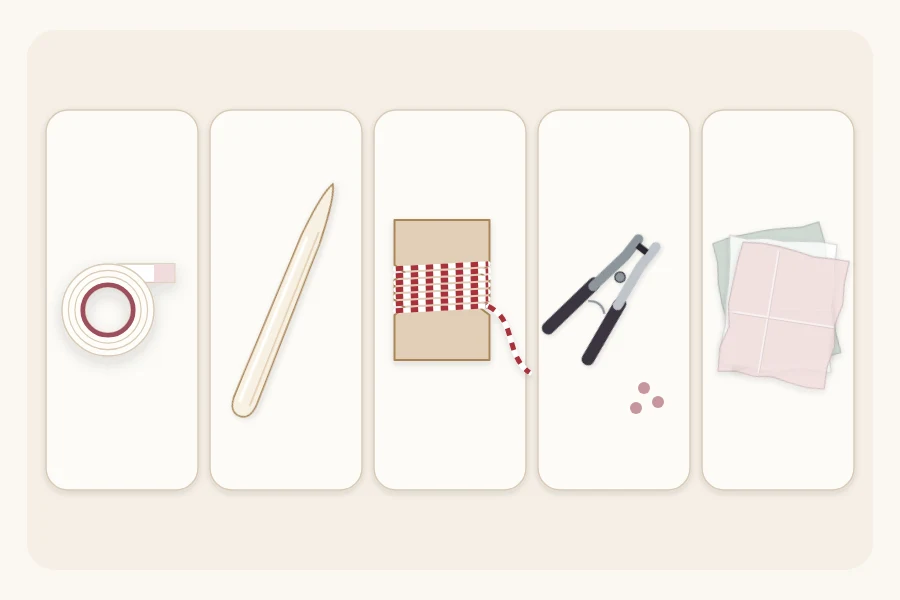
None of these is essential on day one. Add them as a project calls for them. A pack of tissue, for example, earns its place the first time you try wrapping a gift in tissue paper.
Ribbon to start with
One spool of ribbon in a color that matches your paper is enough to begin. The type you pick changes how easy the bow is to tie.
- Grosgrain is ribbed and grips its own knot, which makes it the friendliest choice for beginners.
- Satin is smooth with a sheen, but it is slippery, so knots need a firmer pull.
- Wired ribbon holds shaped loops and suits big bows. The cut wire ends are sharp, so handle them with care.
- Curling ribbon is the narrow, plastic-type ribbon that springs into spirals when pulled across a scissor blade.
Match the width to the box: about 1/4 to 3/8 in (6 to 10 mm) for small boxes, 5/8 to 7/8 in (16 to 22 mm) for medium ones, and 1.5 in (38 mm) or wider for large boxes. Curling ribbon is a low-cost way to add volume, and how to curl ribbon with scissors explains the technique.
Tags and small finishing pieces
A tag turns a wrapped box into a gift for someone in particular. You can buy blank tags, or cut your own from cardstock with scissors and a hole punch. A piece of card about 2 x 3.5 in (5 x 9 cm) with the top corners clipped makes the classic shape, and the steps are in how to make gift tags.
A pen that writes cleanly on your tags is worth testing on a scrap first. Some inks smear on coated card.
Round paper stickers are handy too. They seal tissue, close a flap without tape and cover a seam that did not land quite where you wanted.
Storing everything
Supplies last longer when they are kept flat, dry and together.
- Stand rolls upright in a tall basket or bin, or lay them in a long shallow box under a bed.
- Slip a cardboard tube or a rubber band around each roll so the paper does not unroll and crease.
- Keep scissors, tape, pencil and ruler in one container so the kit moves to the table in a single trip.
- Wind loose ribbon around a piece of card and fasten the end with a paper clip.
- Save offcuts in a folder. Small pieces become tags, paper bows and bands.
Watch out
Keep ribbon, twine and small decorations away from babies and pets, and store scissors and craft knives out of the reach of children.
What you can skip for now
Specialty cutters, bow-making gadgets and large sets of matching accessories are optional. A sharp pair of scissors and a ruler do the same work. Buy paper and ribbon in small amounts until you know which colors and textures you reach for, then stock up on those.
Frequently asked questions
What are the essential gift wrapping supplies?
The essentials are a roll of medium-weight wrapping paper, sharp scissors, clear tape, a ruler and a pencil. With those five items you can measure, cut, wrap and crease a box neatly. Ribbon and a tag finish the gift, and everything else, such as double-sided tape or a bone folder, is a helpful extra.
Is double-sided tape better than clear tape for wrapping?
Double-sided tape gives a cleaner look because it sits under a folded edge and cannot be seen. Clear tape is quicker to use and holds well on most papers. Many people use both: clear tape for the first hidden seam against the box and double-sided tape for the visible final edges.
Is a bone folder necessary for wrapping gifts?
No. A bone folder is a smooth, blunt tool that presses sharp creases without marking the paper, and it is pleasant to use, but the edge of a ruler or a thumbnail does the same job. It is worth adding only if you wrap often or enjoy folded details such as pleats.