How to Wrap a Gift Without Tape
Wrap a box with no tape at all using a folded pocket, tucked end flaps and firm creases, then lock it with ribbon, twine or a sticker seal.
Tutorial at a glance
Materials
- Kraft or medium-weight paper
- Scissors
- Bone folder or the edge of a ruler
- Ribbon or twine
- Sticker seals (optional)
The tape runs out at the worst moment, usually with one gift left. Learning how to wrap a gift without tape means that is no longer a problem, and it also gives you a parcel with no shiny strips on it and paper that is easier to smooth out and use again.
Tape-free wrapping is not a trick. It relies on a folded pocket that the paper tucks into, firm creases, and something tied or stuck around the outside to keep it all in place.
What holds the paper in place
Three things do the work that tape normally does:
- A pocket and a tuck. One edge of the paper is folded over to make a pocket, and the other edge slides into it.
- Snug creases. Paper that is pulled tight and creased along every box edge grips the box and stays put.
- An outside fastener. Ribbon, twine or a sticker seal locks the folds so the parcel survives being carried.
Used together, these make a wrap that is just as secure as a taped one for a gift that will be handed over in person.
Choose paper that holds a fold
Heavier paper holds tucks better than thin glossy paper. Kraft paper is the easiest choice: it is strong, takes a sharp crease and has enough grip that the layers do not slide apart. Medium-weight matte paper also works well.
Thin coated paper and foil are slippery and tend to spring open, so save them for taped wraps. If you like the plain look of brown paper, there are plenty of ways to decorate it in these kraft paper gift wrapping ideas.
Cut the paper a little longer
The pocket needs extra paper around the box. For a taped wrap you would allow the girth plus about 2 in (5 cm) of overlap. Here, allow the girth plus about 4 in (10 cm): roughly half for the folded pocket and half to slide inside it.
At each end, keep the usual allowance of a little more than half the box height; about two-thirds of the height is comfortable. The full method is in how to measure wrapping paper.
The pocket-fold method, step by step
- Lay the paper wrong side up. Fold one long edge over by about 2 in (5 cm) and crease it firmly. This fold is the pocket.
- Place the box upside down on the paper so the seam will end up on the bottom.
- Bring the pocket side up and over the box so its folded edge lies near the center of the bottom.
- Bring the other long side up, pull it snug and slide its edge into the pocket as far as it will go. Crease the paper along all four long edges of the box.
- At one open end, fold the two side flaps in against the box first. Note that this order is different from a taped wrap.
- Fold the top flap down over them. Turn its raw edge under by about 1/2 in (1.3 cm) so it has a clean folded edge.
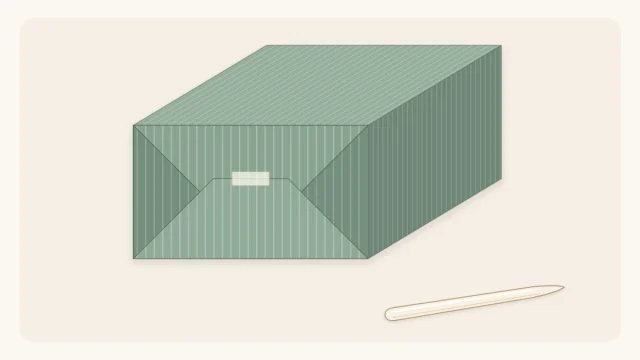
- Crease the remaining bottom flap into a point, fold it up and tuck the point under the folded edge of the top flap.
- Repeat at the other end, then sharpen every edge with a thumbnail, a bone folder or the edge of a ruler.
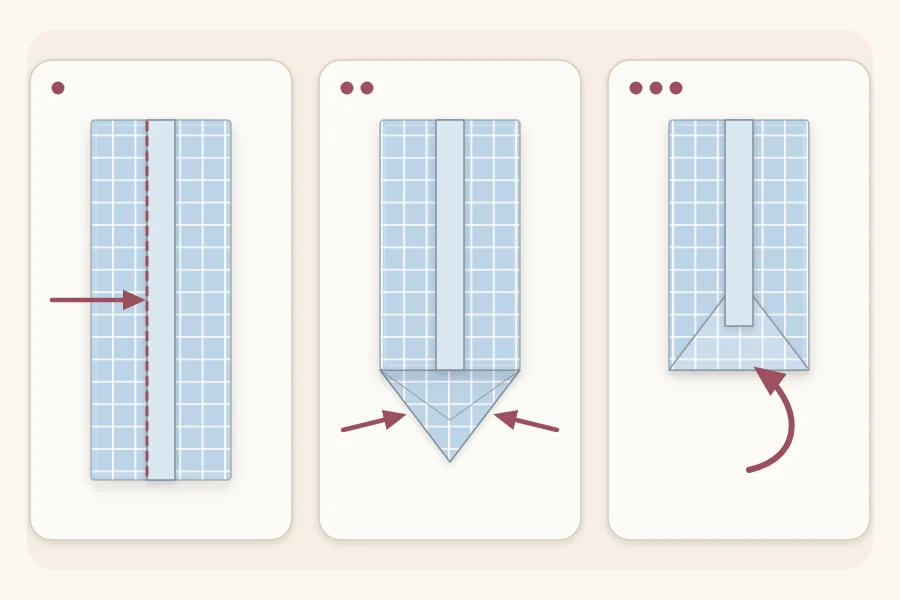
Tip
Keep one hand flat on the seam while you fold the first end. Once both ends are tucked, the paper tightens around the box and the seam stops shifting.
Secure it with ribbon, twine or a sticker
The tucks will hold a parcel sitting on a table. A fastener makes it safe to pick up, stack and carry.
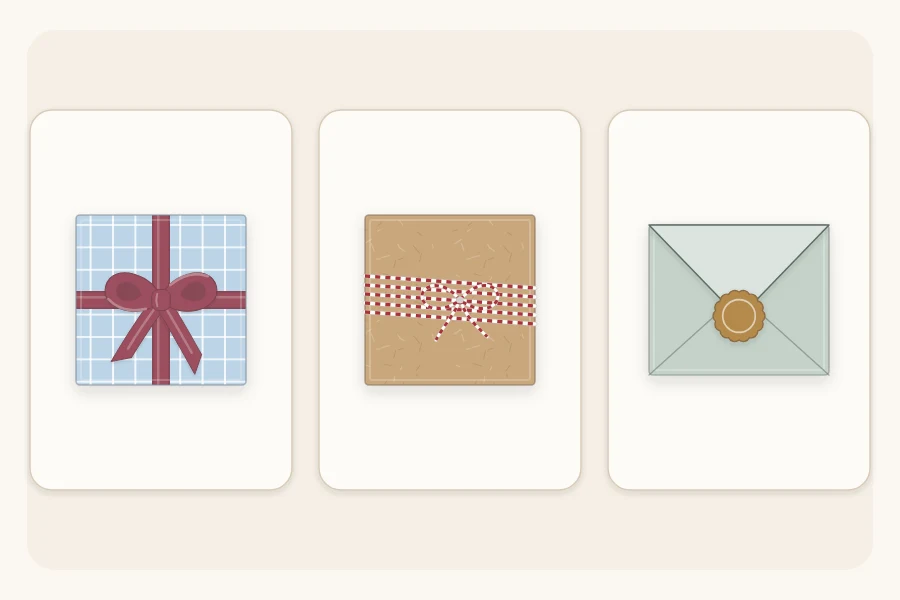
| Fastener | Best for | How to use it |
|---|---|---|
| Ribbon | Boxes of any size | Cross-tie around both directions and finish with a bow |
| Twine | Kraft and matte paper | Wrap around several times and knot on top |
| Sticker seal | Small, light parcels | Press one over each tucked point |
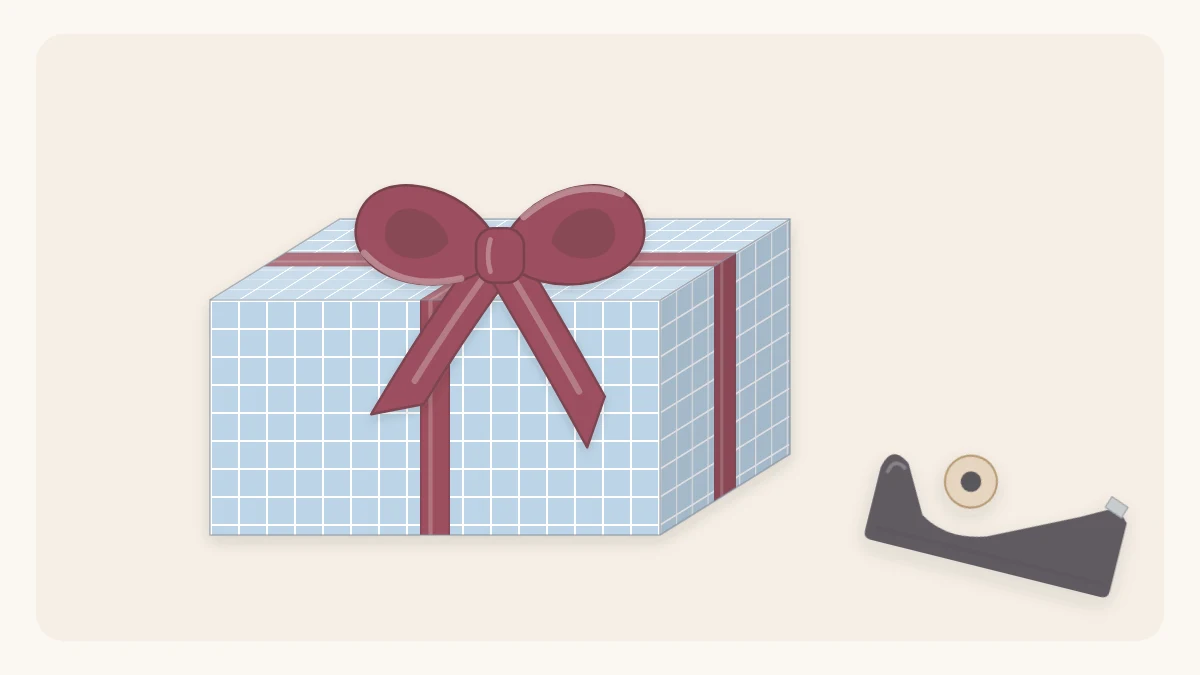
A cross tie is the most secure, because the ribbon runs over both ends and the seam at once. Lay the ribbon across the top, take both ends under the box, cross them with a quarter turn, bring them up the other two sides and tie at the center. The bow itself is explained in how to tie a bow on a gift box.
Grosgrain ribbon, baker’s twine and jute twine grip well. Satin is slippery, so pull it snug before you tie.
Other ways to wrap without tape
The pocket fold is not the only option.
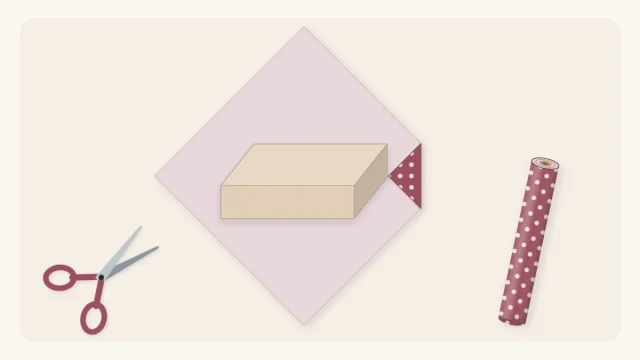
- Diagonal wrap with a sticker. The box sits at an angle on the sheet and the four corners of the paper fold over it, closed by one seal. See diagonal gift wrapping.
- Cloth. A square of cotton or linen knotted on top needs no fastener at all and can be used again. The steps are in fabric gift wrapping.
- A gathered pouch. Soft or round gifts can sit on a few sheets of tissue that are gathered above the gift and tied.
If the wrap comes loose
- The seam slides open. The paper is too short or not snug. Re-wrap with a deeper pocket and pull tight before tucking.
- The end point pops out. The end allowance is too short for the point to reach under the top flap. Cut the next sheet slightly longer, or add a sticker.
- The ends look bulky. There is too much paper at the ends. Trim it before folding.
- The paper will not stay creased. It is too thin or too glossy. Switch to kraft or a medium-weight matte paper.
Watch out
A tape-free wrap is meant for gifts handed over in person. Keep ribbon and twine away from babies and pets once the gift is opened.
Frequently asked questions
Will a gift wrapped without tape stay closed?
Yes, if the paper is snug, the creases are firm and something is fastened around the outside. The pocket and tucked points hold the shape, and a cross-tied ribbon, a few turns of twine or a sticker seal keeps the folds from opening when the gift is lifted.
What is the best paper for wrapping without tape?
Kraft paper is the easiest because it is strong, holds a sharp crease and has a slightly rough surface that grips itself. Medium-weight matte paper is also a good choice. Thin glossy paper and foil are slippery and tend to spring out of the tucks.
What can I use instead of tape to wrap a present?
Ribbon, baker's twine, jute twine and round sticker seals all work. You can also skip paper altogether and knot the gift in a square of cotton or linen cloth, or gather tissue around a soft item and tie it into a pouch with narrow ribbon.